
Two kinds of loneliness, and why we built two kinds of spaces
We have never been more reachable. Most of us start the day with a glance at a screen and end it the same way. Group chats hum. Inboxes fill. Calendars overlap. And yet, in 2025, the WHO declared social isolation a global health threat: one in six people worldwide reports feeling lonely. In Flanders, that number climbs to 37%.
Something doesn't add up. Or maybe the math is correct and the word is wrong. Loneliness is doing far too much work. It describes two completely different experiences — and we keep trying to solve them with the same answer.
Loneliness isn't one thing. It's two.
In 1973, sociologist Robert Weiss made a distinction that has stood up to fifty years of research. There are, he argued, two kinds of loneliness, and they have very little to do with each other.
Emotional loneliness is the absence of one deep, trusted relationship — a partner, a best friend, the person who knows you in detail. You can be surrounded by warm acquaintances and still feel it. It correlates strongly with depression and anxiety.
Social loneliness is the absence of a *wider* circle — a neighbourhood, a recurring group, a sense of being known by more than just your inner two or three. You can have a loving marriage and still feel it, especially after a move, after a job change, after the kids stop being a reason to bump into other parents at the school gate.
The De Jong Gierveld scale, validated across more than 12,000 respondents in seven countries, measures both — separately. Because they behave differently. Because they need different things.
Why one space cannot solve both
This is where most well-meaning "connection" advice falls flat. We tell a person nursing emotional loneliness to "get out more, meet new people" — when what they actually need is one ninety-minute conversation with someone who already knows them. We tell a person nursing social loneliness to "spend more quality time with their partner" — when what they actually need is a Tuesday-night routine with a group of near-strangers who slowly become familiar.
A noisy group event won't deepen a marriage. A quiet, candlelit dinner for two won't build a community. The needs are real, but they live in different rooms.
So we built two rooms.
Space one: warm water, silence, and a maximum of four
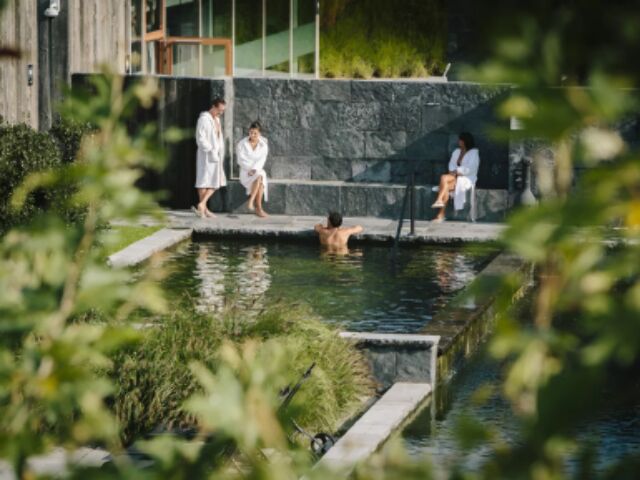
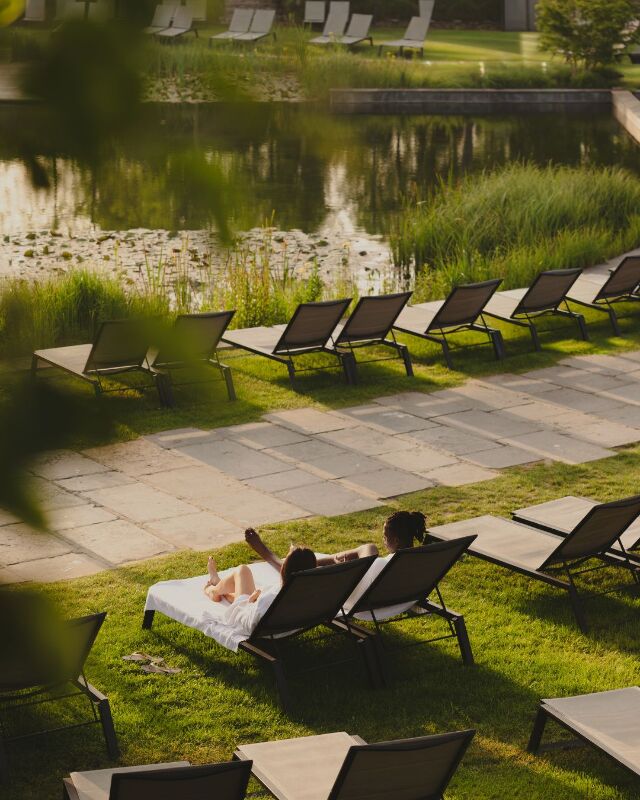
The spa was always meant for one thing: the kind of conversation that takes three hours to arrive. We don't allow large bookings — not because we couldn't fill them, but because that's not what this space is for. Two people. Three. Or up to four close friends. Phones go into a locker before the visit begins. Most of our rooms are whisper zones; some are completely silent.
This isn't restraint for its own sake. It's architecture in service of a specific kind of closeness. Recent research from KU Leuven and the WHO is unambiguous: emotional loneliness is rarely eased by more contact. It is reliably eased by uninterrupted, undivided, slowed-down contact. Warm water lowers your nervous system. The absence of a screen lowers your defences. Three hours later, you've had a conversation you couldn't have had at home — not because home is broken, but because home has Wi-Fi.
If you booked the spa expecting a social event, you might leave a little confused. If you booked it expecting the person next to you to come back into focus, you'll leave with something rare.
Space two: fitness, and our new social running club
But emotional intimacy is only half of what makes us feel human.
In 2014, social psychologists Gillian Sandstrom and Elizabeth Dunn published a study with a deceptively quiet title: The Surprising Power of Weak Ties. They found that people felt happier and more connected on days when they had more brief, casual interactions with acquaintances — the barista, the colleague two desks away, the woman who shows up to the same Wednesday class. The effect wasn't subtle, and it was independent of the quality of their closest relationships. Weak ties matter on their own.
Add a second layer to that. When a group of people move in sync — running at the same cadence, dancing, rowing — their bodies release endorphins, and several studies (Cohen, Ejsmond-Frey, Knight & Dunbar, 2010; Tarr et al., 2015) have shown that this measurably accelerates social bonding. Pain thresholds rise. So does the feeling that the people next to you are *yours*. We were built to feel close to the people we move alongside.
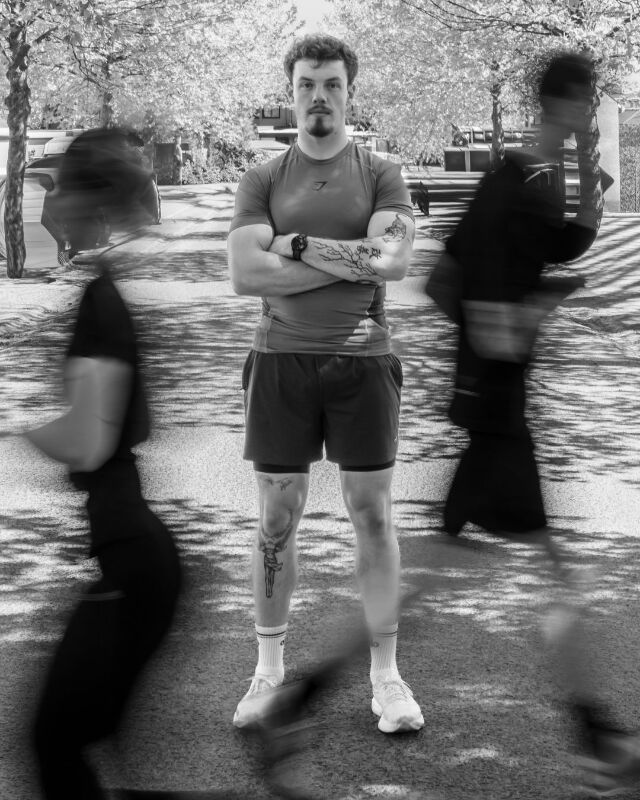
That's what our fitness floor has always been for. And it's why we're launching the Waer Waters Social Running Club. Once a week, every level welcome, at an honest conversational pace. We run, we stretch, and we finish back at Waer Waters with a clean drink in hand and the kind of after-run conversation that doesn't quite happen anywhere else. No app. No leaderboard. Just a recurring evening with a group of near-strangers who, after a few weeks, stop being strangers.
It is, in almost every way, the opposite of what happens in the spa. And that's exactly the point.
Two kinds of loneliness. Two kinds of spaces.
The most useful thing we can say about the loneliness epidemic, from where we stand, is that it is not one problem. It is two — and they live in different parts of our lives.
For the relationships that already mean the most to you, you don't need more events. You need fewer interruptions. Warm water. A locker for your phone. A whisper zone. Three uninterrupted hours.
For the wider circle you may not have yet — or may not see often enough — you don't need depth. You need rhythm. A weekly class. A Saturday run. The same faces, every week, until they aren't strangers anymore.
Disconnect to reconnect, both ways.